


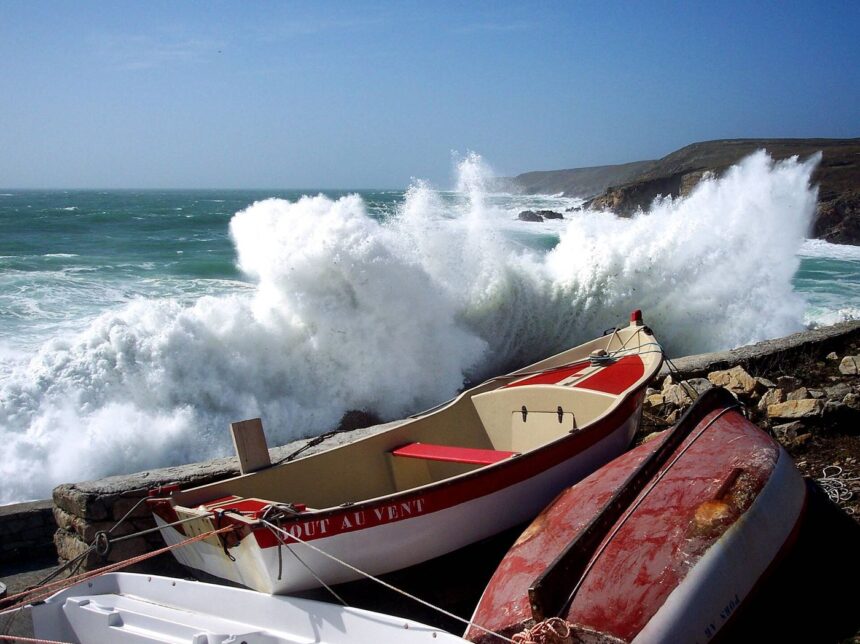
Each autumn, the Atlantic sends its reminders ashore. Ireland’s storm season has lengthened and its rainfall records keep being rewritten, and with them the pressure on a forecasting and flood-defence system designed for a gentler climate. The question facing meteorologists and local authorities is no longer whether extreme events will come, but how much warning — and protection — they can deliver.
Forecasting has genuinely improved. Higher-resolution models, denser rainfall radar and river-gauge networks now give community-level flood predictions days out, replacing the county-wide vagueness of a generation ago. The difference shows in outcomes: the storms that once caught towns by surprise increasingly arrive to find barriers up and cars moved.
Where the water still wins
The weak points are known and stubborn: surface-water flooding when drains are overwhelmed faster than any river rises, coastal towns where storm surge meets high tide, and developments built on flood plains in earlier, drier decades. Met Éireann‘s warning system has been refined to name impacts rather than just weather, and our weather coverage tracks how those warnings land with the public storm by storm.
Insurance is becoming the sharp end of the problem, as households in repeatedly flooded areas face rising premiums or refusal — a slow crisis arriving one renewal letter at a time.
Adaptation is a building programme
Flood-relief schemes are progressing town by town, engineered to standards that assume a wetter future. Catchment-scale thinking — slowing water upstream with wetlands and woodland — is moving from environmentalist wish to official strategy.
The human network behind the warnings
For all the model resolution, flood response still runs on people who know their ground: the council crews who know which underpass fills first, the coastguard volunteers, the farmers who move stock on instinct confirmed by forecast. Local knowledge networks — river watchers, community flood groups, the neighbour with the sandbag store — are being formally woven into warning systems, with group messaging and warden schemes replacing the telephone tree.
There is a research frontier here too: citizen rainfall reporting and flood-photo mapping are feeding real-time data into the models, turning the warned into sensors. Ireland’s storm future will be met by a hybrid system — supercomputers above, communities below — and the investments now under way suggest the country intends to be readier for the next Atlantic visitor than the last.
Homeowners are not waiting for the strategy documents. Flood doors, raised electrics, water-resistant flooring and gardens redesigned as drainage have become unremarkable renovation items in vulnerable postcodes, and a small industry of surveyors now grades properties for flood resilience the way energy raters grade insulation. Insurers are beginning to reward the work with premiums that finally acknowledge it. Adaptation, in Ireland’s flood story, is turning out to be a thousand private decisions ratified by public investment — the forecast improved, and a country started building to match it.
The storms will keep coming; that much the Atlantic guarantees. Everything else — the warnings, the walls, the wisdom about where to build — is a choice, and it is being made now.